
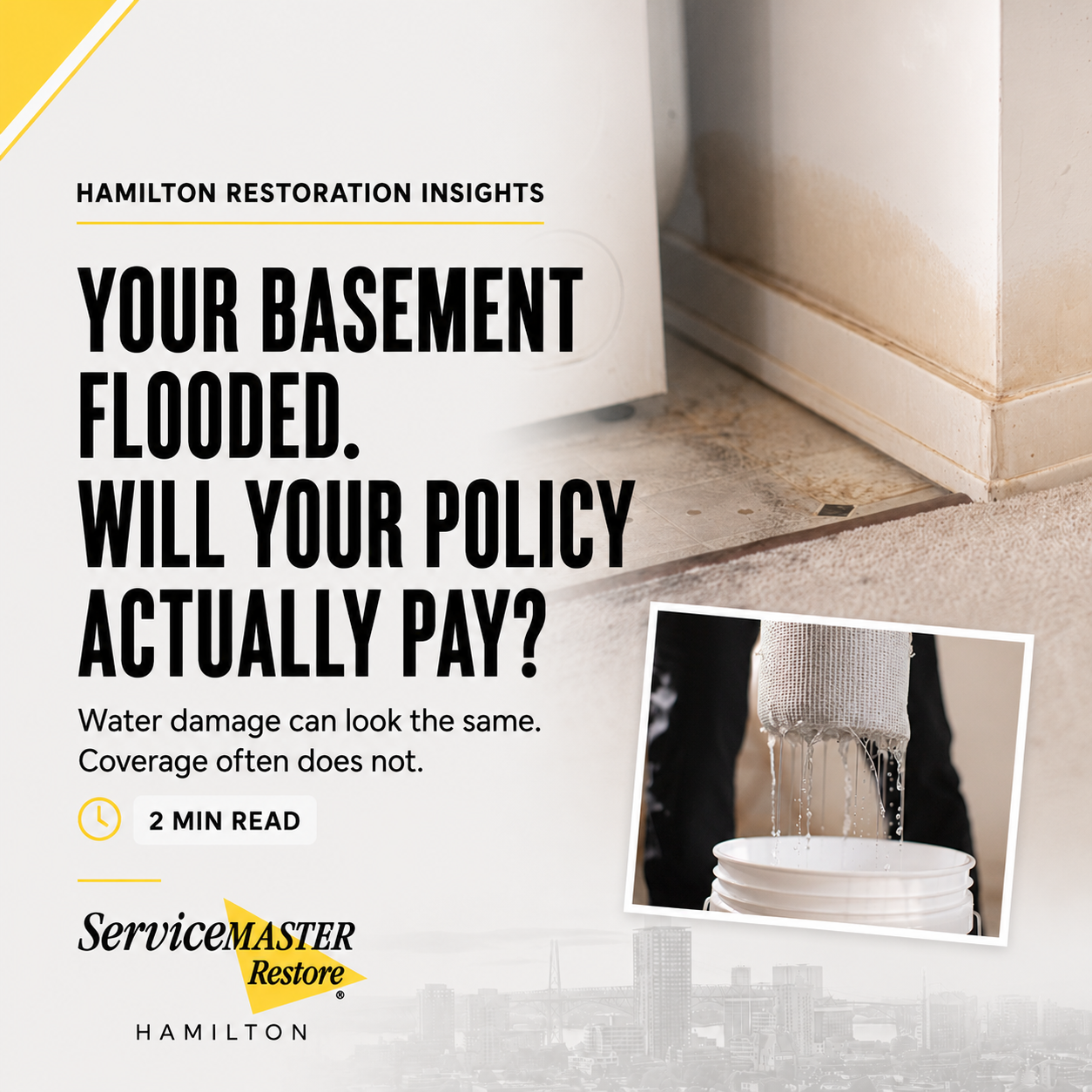
So here is something most homeowners find out at the worst possible moment: a flooded basement is not really an insurance category. How the water got there is one of the biggest factors in determining coverage.
Two houses on the same street can end up with the same six inches of water on the same night and face completely different insurance questions. A major difference is the source.
Water is not just water to your insurer
Insurers generally treat water losses differently depending on origin:
A burst pipe or failed appliance. Sudden and accidental water discharge inside the home is the scenario standard policies are typically built to respond to.
Sewer backup. When water backs up through a sewer or drain, including during an overwhelmed municipal system, that loss generally requires separate, optional sewer-backup coverage.
Overland water. Surface water from heavy rain, spring thaw, or overflowing rivers or lakes that enters the home at ground level is generally covered only when optional overland-water coverage has been purchased. Availability and limits can vary in higher-risk areas.
The Insurance Bureau of Canada confirms that sewer-backup and overland-water coverage are generally optional, and that wording, limits and exclusions can vary between policies.
That is why the same storm can produce very different insurance outcomes from one home to the next. The only authoritative answer about your home comes from your own policy.
After severe flooding hit the Niagara region this summer, IBC issued guidance and activated its community assistance helpline to provide general insurance information to affected residents.
The questions residents were asking are ones worth answering before a storm, not after.
Two minutes of homework
Pull out your declarations page and policy documents, or ask your broker, and confirm whether you have sewer-backup and overland-water coverage.
Ask what limits, deductibles and exclusions apply.
If you do not have the coverage, ask what adding it would cost for your property.
Hamilton homeowners have one more tool worth knowing.
The City’s Protective Plumbing Program offers a grant of up to $2,000, plus the cost of the building permit, toward eligible work including a backwater valve, downspout disconnection and sump-pump installation.
One detail matters: receiving the maximum grant requires using a contractor from the City’s pre-qualified list. If an outside contractor is used, the backwater-valve portion is capped at $500.
Eligibility rules apply, including that the home must have been built before January 1, 2012, so review the program requirements before booking anyone.
If your basement floods anyway
Photograph and record the damage before anything moves.
Keep damaged items where practical unless they pose a health hazard, and photograph anything that has to be discarded.
Report the claim to your insurer as soon as possible and get professional mitigation underway quickly.
A restoration contractor should document the affected areas, moisture levels and drying progress throughout the process.
That documentation matters because mitigation is not simply about removing what is wet. Depending on the source of the water, contamination level and materials affected, some parts of the home may be dried and saved while others may need to be removed.
The goal is to stop the damage from getting worse.
We would rather you read this now, with a dry basement, than search for it standing in six inches of water.
It took two minutes. Your policy review will take about the same.
Hamilton Restoration Insights
What’s happening in our city, through a restoration lens.
A weekly series from ServiceMaster Restore of Hamilton.